
Brand protection without the enterprise contract: a practical lookalike checklist
You do not need a six-figure brand-protection suite to watch for copycat domains. Here is a practical checklist for brand owners, growing companies, and small agencies.
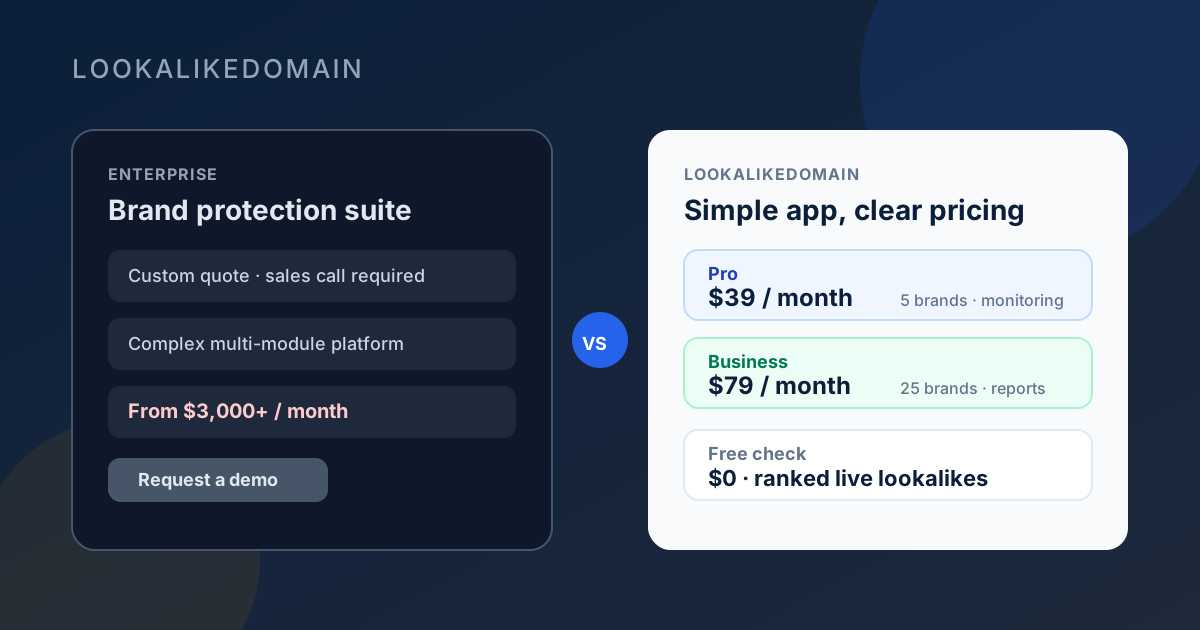
Enterprise brand-protection platforms exist for a reason: large portfolios, many markets, and takedown workflows with counsel attached. They also often cost thousands of dollars a month and start with a sales call.
Plenty of brands need something narrower: see which lookalikes are registered, understand why they matched, export a report, and get told when new high-risk names appear.
A checklist that fits a small team
- Run a lookalike check on the domain you already own, not a random keyword dump.
- Review high and medium risks first; ignore noise until the clear matches are handled.
- Note which names have a live site or mail hosts.
- Decide what to report to the registrar or host, with counsel if needed. Use a clear abuse report template when you write in.
- Turn on monitoring so next week’s registrations do not depend on memory.
That sequence does not claim a domain infringes a trademark. It gives you a priority list and enough context to act.
What evidence actually helps
Registrars and hosts respond better to concrete abuse reports than to a vague complaint. Useful context includes the lookalike name, how it relates to your brand, whether it resolves, and screenshots of a deceptive page if one exists.
A tool’s job is to surface the names and the reasons they matched (typos, hyphen combos, brand-plus-keyword patterns), plus registration and hosting detail when you need it for a report. Filing the report stays with you or your counsel.
When a simple product is the right fit
If you manage one brand or a handful of client brands, pay for clarity and continuity: ranked results, shareable PDF/CSV, and a weekly email when new risks appear. If you need global enforcement across dozens of marks and markets, an enterprise suite may still be the right layer on top.
Start with a free check on your real domain. If the list is empty, you have a baseline. If it is not, you already know whether monitoring is worth more than hoping nobody registers the next cousin name.