Frequently asked questions
What is a lookalike or copycat domain?
A domain built to be mistaken for yours — for example ad1das.com, adidas-login.com, or adidas-invoices.net next to the real adidas.com. People read the start of a domain and skim the rest, and these names are designed around that. They show up in phishing emails, fake invoices, fake job offers, and paid ads. Even a short-lived copycat can steal logins or payments before anyone notices.
How is this different from other lookalike checkers?
Most checkers guess a few hundred spellings of your name and may or may not actually check whether any of them are registered. We search ~250 million registered names across major domain endings, updated daily. That finds combinations nobody would guess, like adidas-refund-center.com, plus names that are registered but have no website or DNS yet. Each match comes with a plain reason and a risk rank.
Is the free checker really free?
Yes. A signed-out check shows the top 10 matches and the total count. A free account shows the top 50 for one brand. Pro shows the full list, up to 250 domains. Business monitored brands keep up to 1,000: the PDF is the top 250 and the CSV includes the full list. Paid plans also include a deeper scan and daily monitoring.
Which domain endings do you check?
About ~250 million registered names across generic endings, including .com, .net, .org, .info, .biz, .app, .shop, .email, and more, updated daily. We don't cover most country endings (.co, .io, .de, .uk) or copycats hidden in subdomains like adidas.com.example.net yet.
What do I get that helps me act?
Clear, ranked lookalikes with a plain reason for each match — information you can use in an abuse report or hand to a client. Paid plans add registration and hosting context, shareable PDF and CSV reports, and optional weekly updates when new high or medium risks appear. We don't file takedowns for you, but the abuse report guide on our blog shows how to report a domain to its registrar and host.
Does a match mean the domain is malicious?
No. A domain name alone can't prove intent. Some matches are resellers, fan sites, or old registrations. We show the signals — how close the name is, whether it can send email, whether a website is live — and why each one is worth a look. You decide what to act on.
What if a lookalike is actually ours?
Dismiss it as “Legitimate — owned by the brand” and it moves out of your list. Many companies register lookalikes of their own name defensively.
Who is LookalikeDomain for?
Brand owners, online shops, nonprofits that take donations, finance teams worried about fake supplier invoices, and agencies or IT providers watching domains for clients — without an enterprise contract or a sales call.
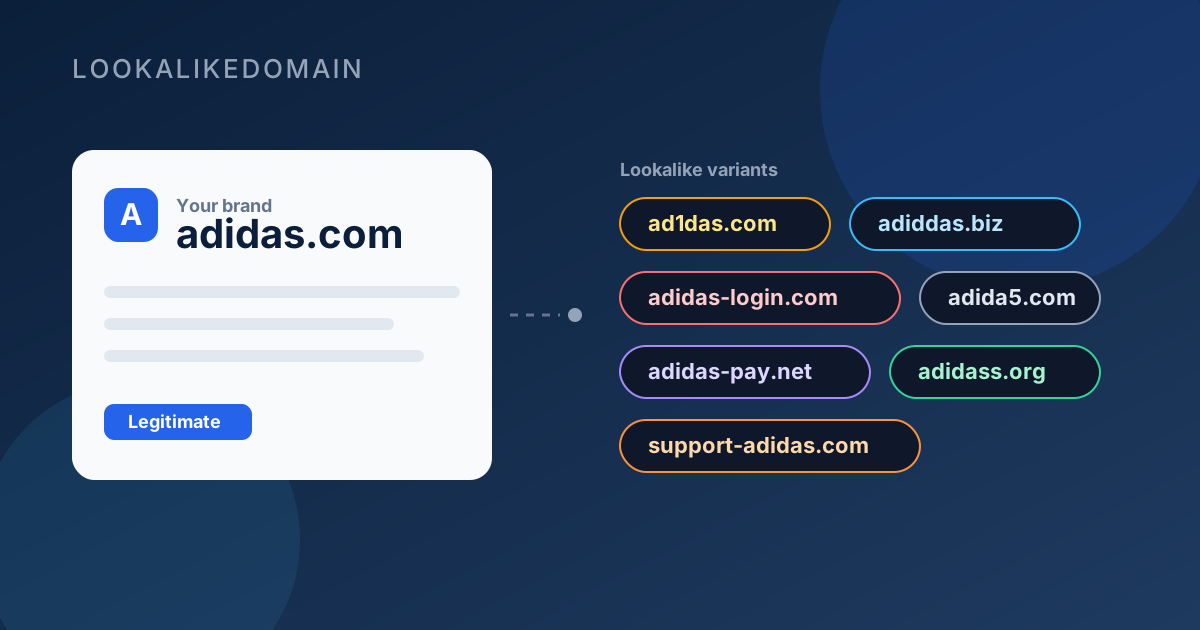 Lookalike domains and phishing: how copycat names get past users
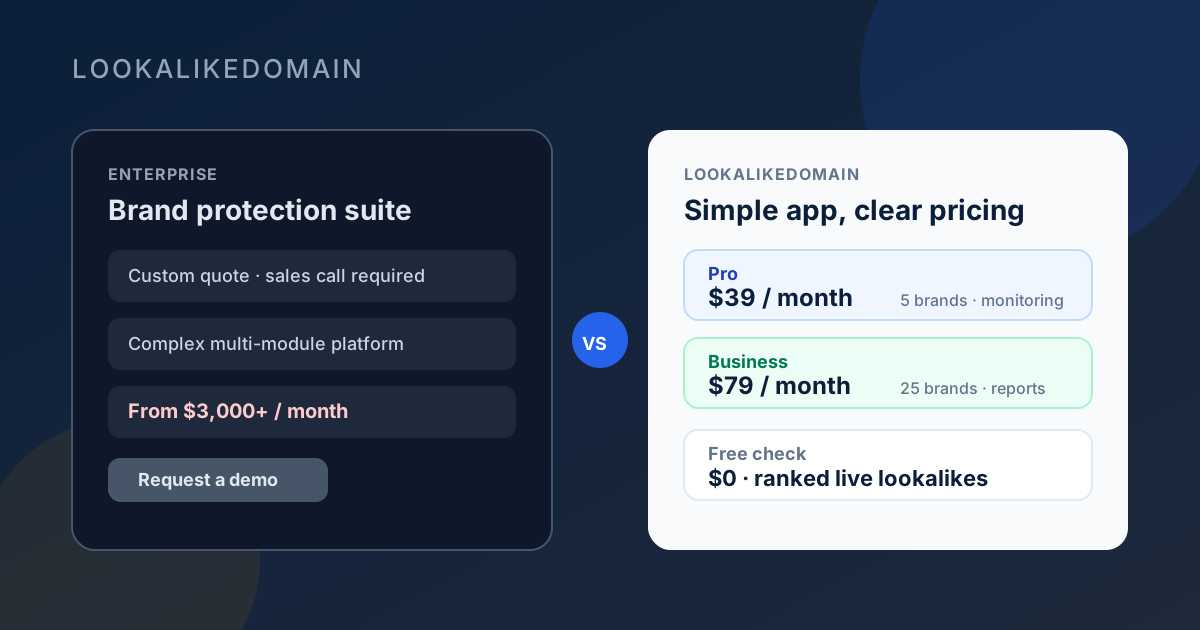 Brand protection without the enterprise contract: a practical lookalike checklist
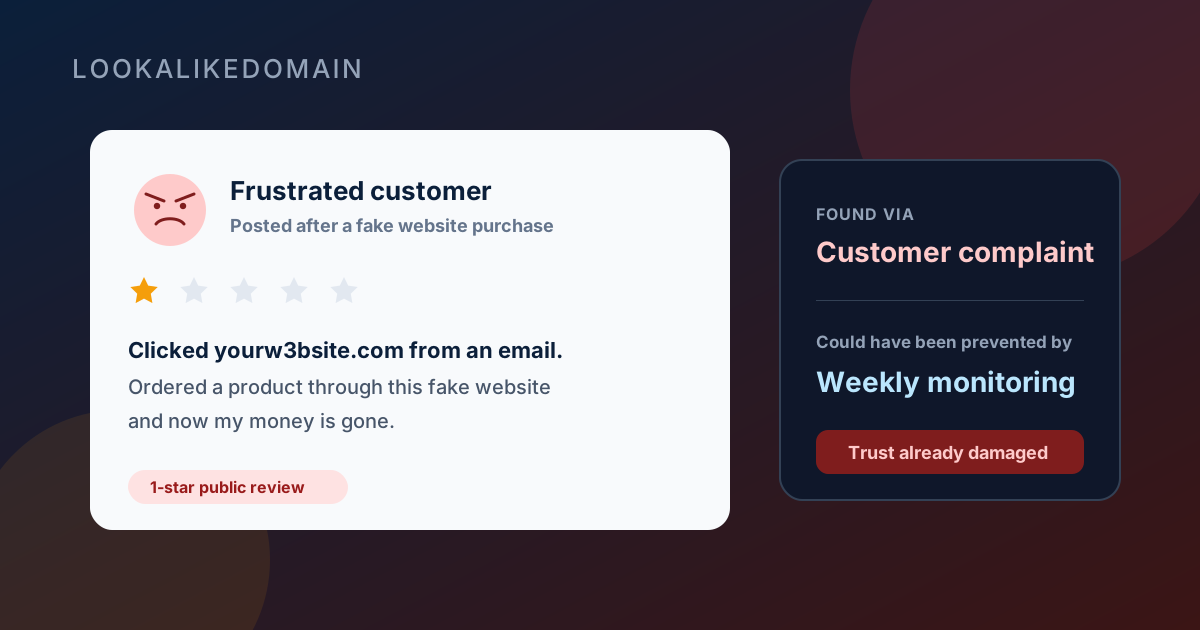 Why waiting for a customer complaint is the expensive way to find copycats