
Why waiting for a customer complaint is the expensive way to find copycats
Domain registration is cheap. Late discovery is not. Monitoring lookalikes keeps the decision on your calendar instead of on a support ticket.
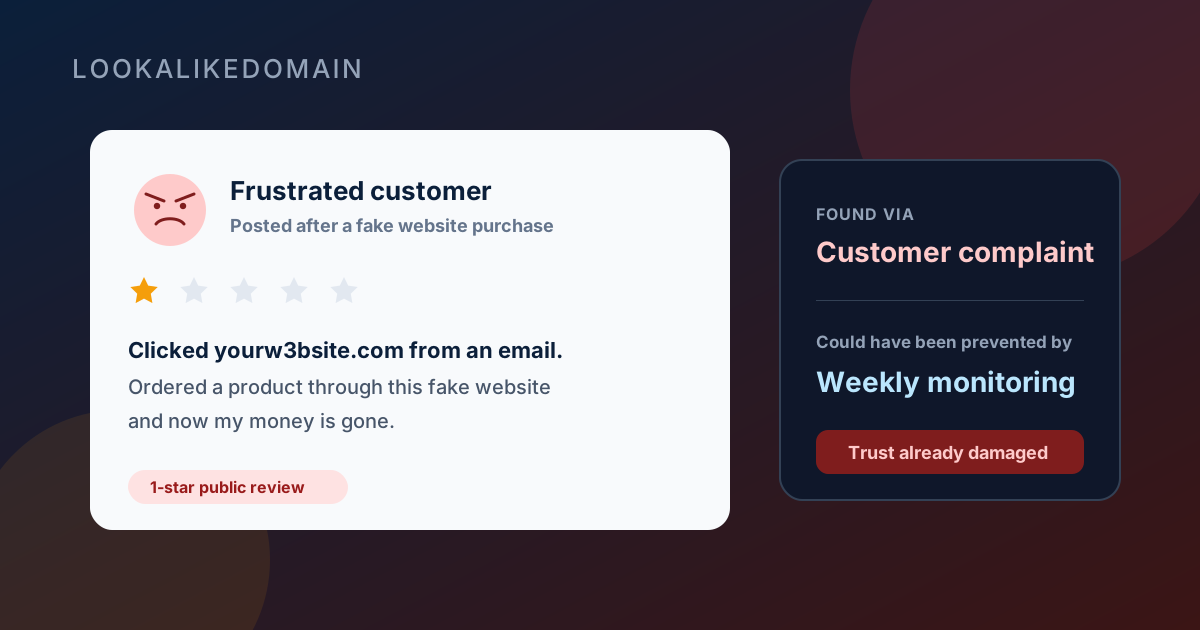
If the first time you hear about a fake login page is from a customer, you are already behind. The domain was registered earlier. The page went live earlier. Screenshots and forwards are already circulating.
Lookalike monitoring is not about finding every similar word on the internet. It is about noticing intentional registrations early enough that you can decide what to report before the inbox fills up.
The useful window is short
Anyone can register a domain in minutes. The useful window for a brand team is between that registration and the first convincing use: a phishing mail, a paid ad, or a page that collects passwords.
A quarterly manual search misses that window. So does a spreadsheet someone updates when they remember. Continuous checks against live registrations turn new names into a weekly habit instead of an incident.
Late discovery has a real bill
The invoice is rarely a single line item. Support time, legal review, registrar reports, and internal explanations stack up. Customer trust drops even when your real site was never compromised. Industry research on scam and breach costs (BrandShield, IBM) is a reminder that one successful campaign can outweigh years of watching the names.
Proactive monitoring does not remove the need for good reporting to registrars and hosts. It changes when you start: with a short ranked list and a reason for each match, instead of with a panicked forward from sales. When you are ready to report, see how to submit a lookalike domain takedown.
What “good enough” monitoring looks like
You want fewer, clearer alerts (high and medium risks with plain explanations), not hundreds of low-signal registrations. You want the list refreshed as zone data updates, and a weekly digest so someone on the team actually looks.
If you only check after something has gone wrong, you are reading the list late. Put new registrations on a calendar. Treat customer complaints as a failure mode, not a detection strategy.