Domain monitoring vs trademark watching: what each one actually catches
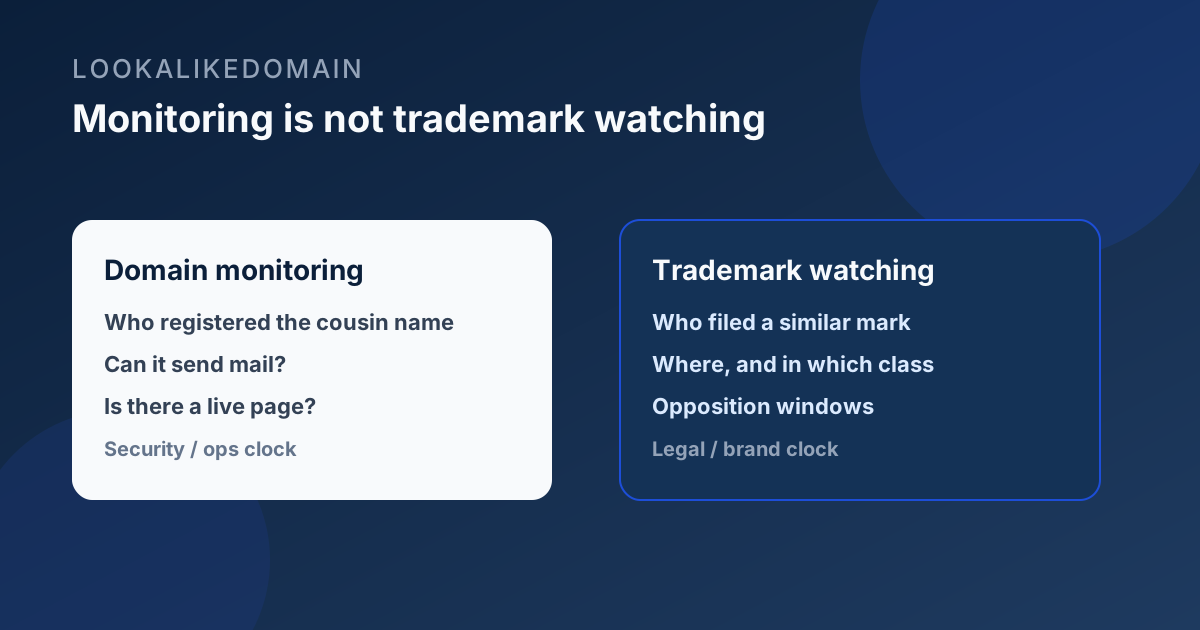
Trademark watching watches filings. Domain monitoring watches registered lookalike names, mail setup, and live pages. Most brands need both clocks, not a single product label.
People say “brand protection” and mean three different jobs. One is watching trademark offices for confusing filings. One is watching domain registrations for cousin names. One is enforcement once something harmful is already live. Mixing the first two into one vague subscription is how teams buy the wrong clock.
Trademark watching answers: did someone file a mark that looks like ours, in a class we care about, in a country we trade in? Domain monitoring answers: did someone register a name that customers can confuse with ours, and is that name already useful for mail or a website?
Different inputs, different urgency
A trademark filing moves on office timelines measured in months. You may get a window to oppose. Counsel and a watching service earn their keep there.
A lookalike domain can be registered today, get mail DNS this afternoon, and sit in a phishing kit by the weekend. Customers do not wait for an examiner. Support tickets and chargebacks do not wait either. That is why domain monitoring is closer to security and ops than to pure IP docketing.
Neither job proves the other. A clean trademark watch does not mean your brand-plus-login cousins are quiet. A quiet lookalike list does not mean a competitor left your mark alone in another market.
What domain monitoring is for
Start from the domain you already use. Generate and rank registered neighbours: typos, digit swaps, Unicode confusables, hyphens, and brand-plus-keyword patterns such as support, secure, pay, or update. Then enrich what matters: DNS, mail, website, and enough registration context to write a useful abuse report.
The output is a priority list with reasons, not a legal opinion that a name infringes. When a high-risk name appears, you decide whether to report it, buy it if it is still available and worth owning, or brief counsel. Continuous monitoring is there so the next registration does not depend on someone remembering to re-run a manual check.
What trademark watching is for
Watching services and law firms track official gazettes and databases. They flag similar marks, goods and services classes, and deadlines. That work protects the mark as property. It rarely tells you that secure-yourbrand.com started answering mail last Tuesday.
If you only buy trademark watching, phishing and fake login pages still arrive through domains. If you only buy domain monitoring, you can still be late to an opposition in a market where a filing matters more than a parked site.
A simple split that works for most teams
- Keep trademark watching with counsel or a specialist service for filings and renewals.
- Run domain monitoring on the brand domains customers actually type and click.
- Treat mail-ready and live-site lookalikes as security incidents with an owner, not as “nice to know” IP noise.
- Use the same person or channel to escalate: monitoring finds the name, counsel or your abuse process decides the remedy.
LookalikeDomain is built for the domain side of that split: ranked lookalikes, plain reasons, and optional weekly monitoring. It is not a substitute for trademark watching. Start with a free check on your real domain if you want to see what the domain clock already shows.